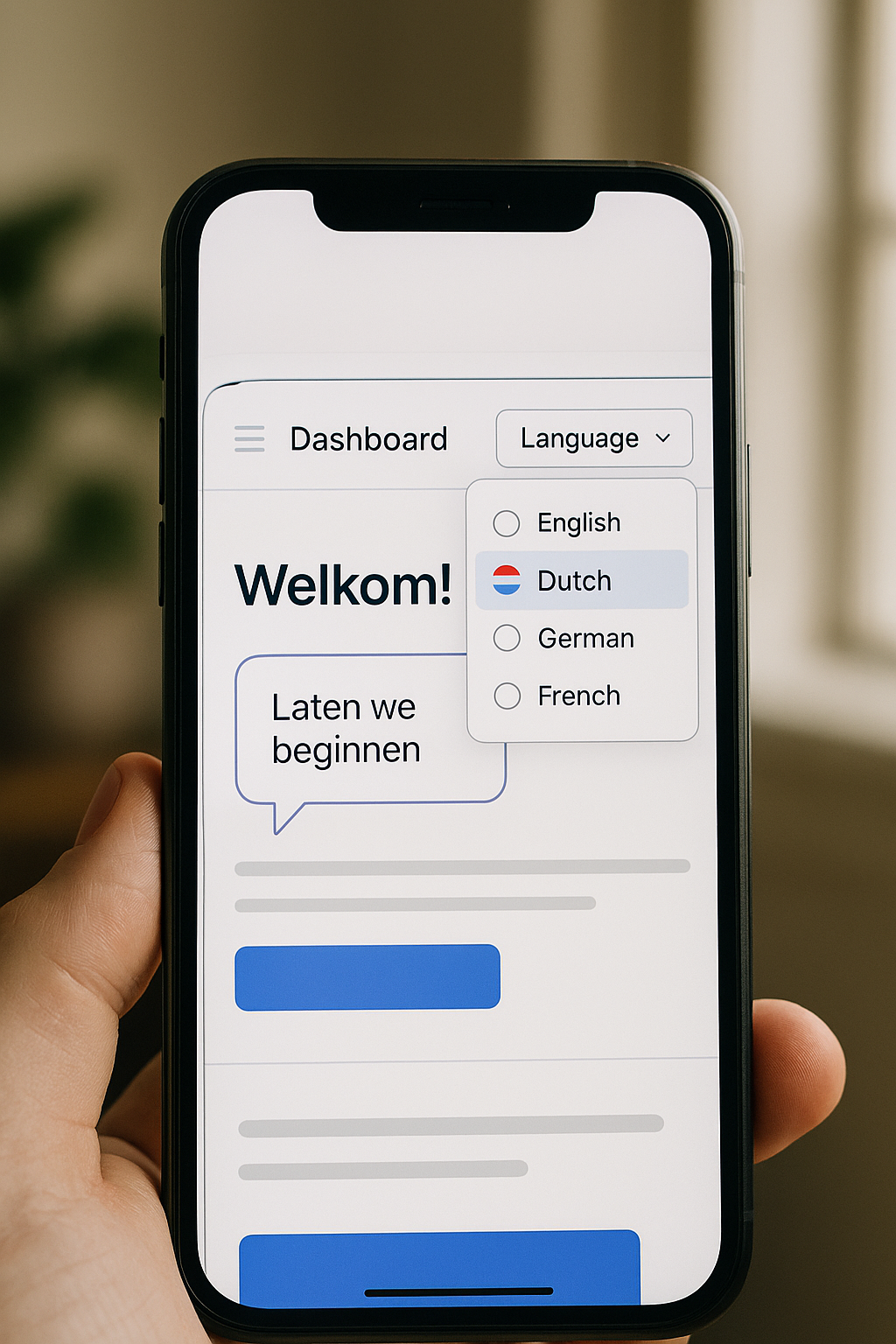
Do SaaS companies need Dutch translations in this day and age?
Everyone speaks English, right?
Sure, your target audience will often speak English.
But speaking their native language is essential. So why should you invest in Dutch translation?
For three main reasons:
1.
Conversion
People feel a brand speaks to them when it speaks to them in their native language.
Did you know that
65% of consumers prefer content in their own language, even if they’re fluent in English?
A staggering 40% won’t buy at all from websites in other languages?
The ROI of localization is pretty high!
2.
Clarity
But it goes beyond conversion. Don't overestimate your potential users' language skills when it comes to the parts that need to be absolutely clear.
SaaS success depends on smooth onboarding and ease of use. Many users abandon your product, not because of poor functionality, but because they are unsure what to do. Translating UI text, tooltips, and help docs into Dutch removes friction — and keeps users engaged.
This applies to all sections that contain instructions and important information, such as:
👉 Onboarding and in-app guidance
👉 Plan comparisons
👉 Pricing pages and checkout flows
👉 Customer support and help centers
And then of course there are the sections that contain legal information - which, as we all know - is hard enough to understand in our native languages:
👉 Legal information
👉 Privacy terms
3.
Revenue
Ultimately, user retention leads to revenue.
Big brands are well aware of the importance of localization.
Salesforce, Monday.com, Zendesk, and Shopify all localize into Dutch — not just their interfaces, but also blog posts, help centers, and customer emails. (I have actually contributed to some of these Dutch translations by working for large global translation agencies).
Ready to grow in the Dutch-speaking market?
I’ll translate and adapt your content so Dutch users feel right at home.